Friday, May 30, 2008

marketplace in Ulus


Ankara, May 29, 2008

My sister's last day in Turkey, we went shopping in Ulus, a historic neighborhood in north-central Ankara, where from the broad, grimy, cacophonous Ataturk Boulevard, smaller streets and alleyways spread up toward the castle. At the base of the hill is a typical urban marketplace, with an indoor area dedicated to food ringed by small shops, shoulder to shoulder, selling baby clothes, teapots, drill bits, nuts and spices, and any other household item you might want. With the clock ticking toward our date with auntie Turkan and uncle Faruk across town, and the list of people to buy gifts for glaring at her, Kate got down to business. In the kitchen shop, she bargained like a pro with a short, balding, tight-lipped man. A true professional, he held his own in the haggling, but Kate came away with a good deal on tea pots, glasses, saucers and spoons.

She spoke, and I interpreted. Mind you, I speak Turkish poorly. It helps that I have pactice working profesionally as a Spanish interpreter, but interpreting Turkish feels like batting practice, with baseballs flying at me from two machines set to super-fast.

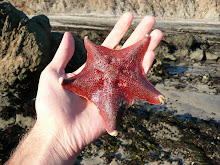
Meanwhile, the salesman's coworker shuffled between us and the door, where called out the shop's wares, prices for soup pots and such. He was taller, thin, mustachioed, smoking, wearing a straw cowboy hat. He smirked as he sized us up and asked us where we were from, then turned to help an elderly couple wearing Muslim skullcap and headscarf. Soon he bounced back to where we were, tapping a few piles of tea saucers. When Kate looked up to see what the racket was, he opened his eyes wide, pointed to one as if to say "check this out," then banged dozen saucer piles in quick succession, like a xylophone. We chuckled, his coworker scowled. Later he came up to me, grabbed my forearm, pointed at my sea star tattoo, and in the simplest of body language, he asked, "what's all this about?" I answered in kind, "who knows?" Looking at me in the eye, up close, he smiled, and went back to yelling for customers at the door.

too cool for Istanbul

Bebek, May 23, 2008

In this chic neighborhood, a young man walks alone past yachts and scrappy fishing boats. His t-shirt says, in English of course: Define girlfriend.

Bursa


May 26, 2008

Today we toured the Green Mosque. Four years ago, my friend Gus was there, and had a similar experience:

"Went to the fabulously beautiful Yeşil Camii just as 20 year old İsmil was opening the place. He spoke some english (a rarity here) and we talked about the early Sultans. He took me to the usually closed Sultan's balcony booth and helped me find the spinable vertical cylinders that were installed by the original architects to test the "health" of the building. If they spin, all is well. If not, the supports are bearing too much pressure. The cylinders became unspinable about four years ago. The mosque was built by Mehmet I in the early 15th Century after he had salvaged the Empire following the rampage of Tamerlane (one of the most interesting figures in history). "

The man who guided us around explained the fountain inside the mosque -- very unusual -- was built so that when the Sultan held secret meetings in his balcony rooms, the water's sound would cover the conversations. Also that the ground-level shelves in the mosque's center were for people to discreetly leave food, if they could, or take food, if they needed.


Outside the mosque my father joked with a handful vendors selling trinkets. I only caught snippets of the conversation, but it ranged from bragging about his father the Congressman, about his grandfather, the pasha who owned the entire state of İzmit, and about himself, claiming to be something like the Godfather back in the States. (Yes, as in Marlon Brando.) These and other tall tales had everyone laughing and shouting back, but hardly matching his silliness and pomp.

Later in the day, Judy, Kate (or Suzan, as she insisted we call her) and took a taxi up the hill to the castle and Tophane area to see the tombs of Osman, founder of the Ottoman empire, and his son Orhan, who conquered Bursa, made it the empire's first capital, and during whose reign many elements of modern Turkish culture (such as architecture) were established. In Osman's tomb, although its size and design reminded me of a chapel, I was surprised to see an older couple praying, as if they had gone there to pay homage. What did that mean for them, exactly, that their prayers include the return of the Empire?

In Orhan's tomb, just a few steps away, across a shady patio, I first shooed away a kid insistenly selling packets of facial tissue, but after reflecting on the place and taking a photo, I reconsidered my automatic reaction. I called him over and gave him a coin, calling him "little brother," one of the many affectionate and respectful forms of address people use for strangers all the time. Soon he was out the door, buying simit, a ring of sesame bread, from a white-haired man with a wooden-glass cart that looked like a carriage.

Looking for Necip Bey

Bursa, May 27, 2008

Over breakfast, shortly before we are to leave Bursa, my father mentions that his father's birthplace lies not far from the hotel. Now he tells us. Local foks offer various estimations of the distance -- a few blocks away, a 35 minute drive -- so we decide we can't go, but it's nice to know we have a lead in case I come back here.

With an hour to spare, I walk through the covered market. It seems stories saturate every stone, every shop as narrow as two broom handles, every glance and voice of vendors and shoppers, chidren and beggars. I come to the Great Mosque, leave my shoes at the entrance. Scaffolding blocks some of the colums and decorations, and temporary walls hide construction equipment, but the solemnity and cool air still feel soothing. A few men and women pray in different sections; a Japanese tour group listens to their guide.

Outside, I request a shoe shine from a dark-skinned man who is missing a tooth. He speaks like a drum roll. After asking him to slow down and clarify certain words I almost understood, I give up and just nod, repeating the two or three Turkish affirmations I know: yes, true, of course, ah hah.

I return to the hotel a few minutes late; the taxi driver has already arrived. He knows the old village off Çeltikköy and takes us straight there, chatting amiably with my father in the front seat. Leaving behind the city's busy boulevards, we pass apricot groves, crumbling plaster homes, a new mosque under construction. My father tells us about visiting his grandfather here as a child, recalling the peach trees, the sheep and goats, and the silkworm hut, where the little critters ate mulberry leaves all day long, "making a sound like crunch crunch crunch." At the roadside, between tilled fields, red poppies grow in batches like bright flames, like blood.

We come to a graveyard that spans both sides of the lane to look for the grave of my great-grandfather. It's quiet, no cars, a breeze in the tall creekside grove. At the driver's suggestion, we split up and work toward each other from either end.

There are many graves grouped by family name, none of them our own. According to many headstones, the person was born in the 1300's and lived into the mid-twentieth century. I scratch my head for a minute and realize this is because the new Turkish Republic adopted the Gregorian calendar in 1925.

My father starts getting anxious, saying we should go. He speaks Turkish, losing track of which language is which. We cross the road to search the other section, and again he calls for us to leave. I ask for a few more minutes and walk gingerly around graves.

Then the driver calls out: "Look! Necip Simer!" Sure enough, there it was, a gravestone bearing the same name as my father. Inscribed with graceful Arabic calligraphy at the top, the dates and birthplace follow in modern Turkish. We gather watering cans and empty them in the weeds atop his resting place. My dad cries a little, swears he will come back one day and fix the whole place up. We take some photos and return quietly to the taxi.


Prospect Park on a sunny day


Brooklyn, 5/21/08

At the entrance, two farmers chat beside their large truck, in the shade of an umbrella, a stone's throw from a massive traffic circle. Their folding tables boast potatoes, bell peppers red and green, apples, tomatoes.

A grandmother reads a letter aloud, in Russian, to a baby, hidden in a stroller.

Three Latina nannies call out with accents to white children, spinning dizzy on the grass.

Six Hassidic men at a picnic bench, beneath the tallest tree, at the edge of a large field, discussing.

A teenage girl straddles her boyfriend on a bench, like a horse, whispering.

Beneath shadowy trees, a small blond boy quietly marvels at a waterfall.

The sound of streams running.
Tennis balls bonked by rackets.
Two birds take turns: a bold and melancholic melody, then a shrill whistle.
Sirens.
A Haitian woman sings woefully, eyes closed, one palm up to the cloudless sky.

The Hassids saunter by like it's Shabbat: an elder rabbi among five young men, each with sideburn curls, beards, black suits. Some continue the discussion. One straggles behind, thumbs jumping from key to key on a mobile phone.

Three white guys scratch in their notebooks.


a few other photos from New York: http://www.flickr.com/photos/49944331@N00/sets/72157605550095802/

Friday, May 09, 2008

Sabri Boğday urgently needs your help.


A message from my friend Ezo:

I am writing to ask for your help in saving a life of a Turkish man who has been unjustly sentenced to death in Saudi Arabia. Sabri Bogday is from my home town Hatay, a southeastern Turkish province. He had moved to the Saudi city of Jeddah and was running a barbershop. He was arrested by Saudi officials after being accused by his Egyptian neighbor, a tailor with whom he had a brawl, of “cursing the name of Allah.” Saudi authorities condemned him to death, and an appeal case is in progress. Boğday's family demanded that the president and prime minister intervene to prevent the execution.

Turkish President Abdullah Gül has joined in the efforts to save Turkish barber Sabri Boğday from execution in Saudi Arabia. Gül emphasized the unfairness of the accusation against Boğday, and stressed that Turkey expects the withdrawal of the execution decision. Turkish Prime Minister Erdoğan, too, is taking part in the efforts to save Boğday's life. He told reporters that he had contacted Saudi officials, and was waiting for the result. For more information please see:

Turkish Daily News:

Los Angeles Times:

Amnesty International USA
But even though the president and the prime minister are involved there is no guarantee that would be enough and Amnesty international is urging as many as people as possible to contact the Saudi Arabian government and has issued the following urgent action.

RECOMMENDED ACTION: Please send appeals to arrive as quickly as possible, in English, Arabic or your own language:

- expressing concern about Sabri Bogday's death sentence and calling for it to be commuted immediately if it is upheld on appeal;
- reminding the authorities that they are bound by international standards for fair trial, and in capital cases they are also bound by the United Nations safeguards guaranteeing the protection of the rights of those facing the death penalty, which guarantees adequate opportunity for defence and appeal.

PLEASE SEND APPEALS IMMEDIATELY. Check with the Amnesty International Secretariat, or your section office, if sending appeals after 4 June 2008.

APPEALS TO:

His Majesty King Abdullah Bin ‘Abdul ‘Aziz Al-Saud
The Custodian of the two Holy Mosques
Office of His Majesty the King
Royal Court, Riyadh, Kingdom of Saudi Arabia
Fax: (via Ministry of the Interior) +966 1 403 1185 (please keep trying)
Salutation: Your Majesty

His Royal Highness Prince Naif bin ‘Abdul ‘Aziz Al-Saud
Minister of the Interior
Ministry of the Interior
P.O. Box 2933
Airport Road, Riyadh 11134
Kingdom of Saudi Arabia
Fax: +966 1 403 1185 (please keep trying)
Salutation: Your Royal Highness

His Royal Highness Prince Saud al-Faisal bin ‘Abdul ‘Aziz Al-Saud
Minister of Foreign Affairs
Ministry of Foreign Affairs
Nasseriya Street
Riyadh 11124
Kingdom of Saudi Arabia
Fax: +966 1 403 0645
Salutation: Your Royal Highness

COPIES TO:
Mr Turki bin Khaled Al-Sudairy
President
Human Rights Commission
PO Box 58889, Riyadh 11515
King Fahad Road, Building No.373
Riyadh
Kingdom of Saudi Arabia
Fax: +966 1 4612061
and to diplomatic representatives of Saudi Arabia accredited to your country.

Tuesday, May 06, 2008

This kid is a genius.

Link
I just learned about Quizlet from my friend Sara's "Spanish for Social Change" vocabulary blog. Quizlet was created by a high school student named Andrew Sutherland to help him learn words for French class. It's a super useful version of flashcards. You can create your own list of things to memorize, or draw on others' lists. The computer program tracks which words you know and which you don't, and repeats words as necessary. I just learned how to say "ceiling" in Turkish, as well as "refrigerator," "wall," and a host of other words, and refreshed my memory about dozens of other terms. (I'm headed to Turkey in two weeks, in case you're wondering.) Check it out – quizlet.com.

Sunday, April 27, 2008

Cheat Neutral: just as great as carbon offsets.

Some clever Brits have taken the concept of carbon offsets -- people paying a voluntary fee for their "carbon footprint" so that carbon emissions will be reduced somewhere else -- and applied it to the ethics of cheating on your partner.

[Click on the headline to see how it all works]

Friday, April 25, 2008

Where will you be the first of May?

Join Jobs with Justice and El Comite Pro-Reforma Migratoria Y Justicia Social for the 2008 Immigrant Rights March and Rally!

Date: May 1st
Time: 4:30pm
Location: Beginning at St. Mary’s 611 20th Ave South, Seattle

This year’s theme is “We are not illegal, we are not undocumented, we are workers.”

History:
May 1st has many histories of celebration around the world, currently; it’s globally celebrated as International Workers’ Day. Seattle has a rich history of marching for immigrant/worker rights on May 1st. In 2006 the first massive immigrant rights march took place in Seattle. It created history by mobilizing approximately 60,000 people in protest of House Resolution 4437, debated in Congress, which would have instantly criminalized all undocumented persons, as well as persons who offered them humanitarian aid. Last year, despite the federal government’s harassment of immigrants, thousands of immigrants and allies came out in support and to protest the draconian policies the federal government is enforcing. El Comite, Jobs with Justice and many other community, labor, faith and student groups continue to fight for immigrant/worker justice.

[The text above copied from Jobs with Justice, wsjwj.org. For information in Spanish, click the headline to go to the Comité website.]

Tuesday, April 22, 2008

Photos from "The Party of the (18th) Century"


On April 5th, I had a party, originally meant simply to raise funds for a research trip to Spain, but it turned into a farewell bash once I decided to leave Seattle. My friend Carina was there, and took some fantastic photos ...

[click headline to see them]

Friday, April 11, 2008

Healing across the divide of war


I find Robert Jamieson's columns to be a mixed bag, at times insightful, other times smug. In this one, about two veterans, one pro-Bush, the other anti-war, I think he has done justice to a an important story.

(Click on the headline for the link to the article.)

Tuesday, April 08, 2008

Remembering Abe Osheroff


When I first met Abe Osheroff in 1996, he said something I will never forget.

At the time, UW professor Tony Geist (and surely others) organized a film festival and exhibition of posters from the Spanish Civil War. During these events and some classroom chats, I got to hear many of Abe's impressive stories, such as when he and other activists in Depression-era New York broke open chained doors to move families and their possessions back into the apartments from which they had been evicted. Later, when the U.S. banned Americans from going to Spain, he tried to sneak into the country, to fight against Franco's coup and the larger wave of fascism that was gathering across Europe. His ship from Marseille to Catalonia was torpedoed by an Itaian submarine, and Abe and his fellow volunteers had to swim to shore.

Around the time I met Abe, I was studying labor history, doing an internship with the United Farm Workers, and participating in a campaign to win family housing and health insurance for gay UW students' partners, equal to those which heterosexual students' spouses already received. It was a transformative time for me, and Abe was part of it. His stories inspired me to be bold, and his practical philosophy of "radical humanism" was equally compelling. His words I will never forget: "We are all a part of history. Every single one of us. It's up to you to decide whether you want to be a participant, or a spectator."

Two years later came the 60th anniversary of when the ALB left Spain. A plaque was placed in front of the UW student union building to commemorate the students who had joined the fight, and Abe and other ALB veterans from across the country reunited in a moving ceremony. I was one of many who shed tears to hear the veterans' tales of valor and humor. I felt their stories had infused into me, somehow becoming my own.

That same autumn of 1998, I graduated from the UW. Developing a roll of photo film from my graduation party, I came up with some great shots of family and friends. I tucked these into my wallet, including one of Abe and fellow ALB veterans Bob Reid and Dutch Schultz, posing by the UW memorial on the day of its unveiling. I carried these photos with me for the four months in 1999 I reported on the massive student strike at its National Autonomous University, and during the rest of the year, while I and every other activist in Seattle was frenetically organizing the historic protests against the World Trade Organization.

Abe's memorial will take place May 25th in Seattle. I am sad to say that I will be out of the country, but I will remember him, always.

To read more about Abe Osheroff, a lion of a man:

AbeOsheroff.org

The Seattle Post-Intelligencer obituary: http://seattlepi.nwsource.com/local/358021_obitosheroff07.html

The New York Times obituary: http://www.nytimes.com/2008/04/11/us/11osheroff.html?_r=1&oref=slogin


[This post was revised 4/23/08, after receiving a couple of historical corrections from Gunnel Clark, Abe's wife. Thanks, Gunnel.]

Monday, March 31, 2008

A Village Away from Home

From KUOW.org ...


"Imagine what would happen if you picked up a village in rural Mexico and transplanted it in Seattle's suburbs. Something similar is underway in South Seattle – a village within the city is emerging. The Seattle area has recently become a top destination for the indigenous Purepecha people from the rural hill–towns of central Mexico. Their native language, culture and traditional lifestyle are vanishing in parts of Mexico, but reappearing here. In this five–part series, A Village Away From Home, Reporter Liz Jones traces this migration trend from the Mexican sierra, to Seattle's fast–paced suburbs."

[I'm quoted in one of the segments, in my capacity as a Spanish interpreter, because I interpret for many Purépecha people at White Center Public Health.]

Monday, March 17, 2008

Rally to End the War, Bring the Troops Home!


Wednesday March 19th at 6pm, Westlake Plaza
4th Ave & Pine St. in Downtown Seattle

Join Jobs with Justice and our other membership organizations to mourn and protest the 5th Anniversary of the Iraqi war.

The U.S. Government has been at war in Iraq since 2003. In these five years our government has spent over $400 billion on the Iraq war. Tax dollars that normally would have gone to healthcare, education and affordable housing instead are being diverted to pay for this war. In Washington State over $10 billion have been diverted to the war. In

Seattle alone almost one billion dollars has been diverted.

That means that Washington residents are losing out on affordable and quality healthcare, education, housing and living wage jobs.

End the War Now! Bring Home the Troops Today!

Saturday, March 08, 2008

Honk Fest West!

THE RADICAL MARCHING BAND FESTIVAL


COMING TO SEATTLE MARCH 21 - 23

Friday, March 07, 2008

Jake in Algeria


My friend Jake is doing research in North Africa, and has posted a fascinating summary and photos of his recent trip through the Sahara. Here's a snippet of his writing:

To get by, Tuaregs have had to adapt their traditional practices of trans-Saharan trading to the new globalized economy. Instead of salt, cigarettes now come across the open desert, often in small convoys carrying a million dollars of the contraband. Instead of gold, drugs are coming from South America to West Africa through the Sahara to Europe; a billion dollar trade, and every local official up to the highest generals has a finger in the pie. Instead of slaves, waves of desperate African youth try to reach the shores of Europe on their own, via long and perilous journeys through the Sahara. They work their way from desert town to desert town to make enough money to pay for the deadly passage to Europe, either the straight of Gibraltar from Morocco or Italy from Libya.

Click on the headline above for more.

Sunday, March 02, 2008

RAFFLE TICKETS! GREAT PRIZES!

To raise funds for my upcoming research trip to Spain, I have put together a raffle that will be drawn on Saturday, April 5. The prizes include:

Latest additions:

The Spanish Table Cookbook, from the delicious store by the same name

Bicycle tune-up (an $85 value!) ~ 20/20 Cycles (Central District)


Chocolate bars from Theo Chocolates ~
all locally produced & Fair Trade Certified
* One Origin Ivory Coast 75% cocoa bar
* One organic Coffee & 65% dark chocolate bar
* One organic Fig, Fennel & Almond 65% dark chocolate bar

One hour massage ~ Elizabeth Chaison, LMP (Capitol Hill)

Pitcher of sangría ~ Gaudí, a Catalan restaurant (Ravenna)

$20 gift certificate ~ BluWater Bistro (five locations)

"This Is What Democracy Looks Like" DVD ~ Corrugated Films/Jill Freidberg

"Grain of Sand" DVD ~ Corrugated Films/Jill Freidberg

"A Little Bit of So Much Truth" DVD ~ Corrugated Films/Jill Freidberg

Crab enchilada dinner for six, with wine, delivered ~ Bernal

Two hours of Spanish lessons ~ Natalia Morales

Two hours consultation and help in organic gardening ~ Backyard Bounty/Leonard Wainstein

Photographic print, "Cairn" ~ Carina del Rosario

"Who Are We? Investigations & Findings. A Workbook with 7-inch record"
~ Vis-À-Vis Society

Tea and handcrafted mug by Barbara Dunshee ~ donated by Shelley Gillespie

Bound story-collage, "Jenkins' Memory Store" ~ Shelley Gillespie

$20 Gift certificate ~ Café Rozella (White Center)


Tickets are $2 each. More prizes may be added before the drawing date, so check back here. Some restrictions apply (e.g. many prizes must be redeemed in Seattle). Please email me for details at jeremy at riseup dot net.

Wednesday, February 27, 2008

I'm headed to graduate school.


Six weeks ago I had no plans to attend graduate school. Then one sunny, chilly Sunday afternoon, after sharing Ivar's fish & chips with my friend Trevor down on the waterfront, he asked me whether I had considered reapplying to UCSB's Latin American & Iberian Studies program, which I almost attended two years ago. Yes, I explained, I had thought about it, but the deadline was coming up in just two days, on January 15, and it was too late to prepare another application.

Then it struck me that perhaps the program would consider my previous application, if indeed they still had it on file. I called, and they said yes, I could throw my hat back in the ring. By the end of January, I had received word that I had been accepted again, and two days ago, I learned that I have been awarded a generous UC Regents Fellowship, covering nearly all of my first year's expenses.

Incredible. I guess the research I've done in my free time over the last three years is paying off! Now I have just over a month to wrap up my life in Seattle before going on my planned research trip to Spain and family trip to Turkey, and then moving to Santa Barbara in the summer. Life has suddenly taken a very interesting turn.

Sunday, February 17, 2008

Seattle screenings of "A Little Bit of So Much Truth"

If you haven't seen it, go see it!

When the people of Oaxaca decided they'd had enough of bad government,
they didn't take their story to the media...they TOOK the media!

"A tour de force of documentary filmmaking.
Brilliantly conceived and executed."
-David Barsamian, Alternative Radio

"I love this movie.
And Jill put my name in the credits!"
-Jeremy O. Simer

Special Jury Prize
International Documentary Film Festival Tres Continentes
Caracas, Venezuela


February 20th
Seattle University
7:00 PM
Wyckoff Auditorium
Engineering Building Room 200

February 25th
University of Washington
5:00 PM
Ethnic Cultural Center
3940 Brooklyn Ave. NE

In the summer of 2006, a broad-based, non-violent, popular uprising exploded in the southern Mexican state of Oaxaca. Some compared it to the Paris Commune, while others called it the first Latin American revolution of the 21st century.

But it was the people's use of the media
that truly made history in Oaxaca.

A 90-minute documentary, A Little Bit of So Much Truth captures the unprecedented media phenomenon that emerged when tens of thousands of school teachers, housewives, indigenous communities, health workers, farmers, and students took 14 radio stations and one TV station into their own hands, using them to organize, mobilize, and ultimately defend their grassroots struggle for social, cultural, and economic justice.

From the producer of the award-winning films, This is What Democracy Looks Like and Granito de Arena, comes this intimate, breathtaking account of the revolution that WAS televised.

More info: www.corrugate.org

Wednesday, February 06, 2008

LitFuse revisited


Last summer I participated in LitFuse, a first-time poetry gathering in Tieton, Washington, outside of Yakima. It was a fantastic two days of workshops and readings, including the open mic at the closing. It was Sunday afternoon. The sun leaned down into autumn gold, light streaked into the warehouse where we read and listened. You can hear snippets from that reading and catch glimpses from the rest of the weekend in a slideshow, at http://www.mightytieton.com/tieton_arts-humanities.html. And if you watch 'til the end, you'll hear me have the last word.

Thanks to Tieton Arts & Humanities for the scholarship that made my participation possible.

PS Although the photo above makes it look as if Paul Nelson is haranguing his "Organic Poetry" students, it was actually a good workshop.

Monday, February 04, 2008

OBAMA.

I have a hard time getting excited about any presidential candidate, because I believe an elections system that allows so many millions to be spent, and denies much intelligent debate, is profoundly corrupt.

I believe that social movements -- unions, civil rights groups, the grassroots -- are the engine for major social change, and that it is a mistake to hang too many hopes on one federal official, no matter how charming or influential.

HOWEVER, I must say that I am beginning to get excited about the spirit and the strategy of Barack Obama, and I invite you to ..

watch a rockin' music video, at http://www.dipdive.com/

and read some analysis from my man Paul Loeb:
A Dozen Reasons Why This Edwards Supporter is Backing Obama
How Obama Could Create a Long-Term Democratic Majority


Saturday, February 02, 2008

Thursday, January 31, 2008

Who's reading?

Sometimes I wonder how many people read this blog. I can think of half a dozen friends and family (hi mom!) who have referred to something they saw here in the last year or so. Perhaps this half dozen constitutes the entire readership. Honestly, that's fine by me, especially after my good friend Jo reported the other day that she spent a good long while sampling Engaged while nursing Ruby, her beautiful four-month-old daughter. Poems and politics for friends, moms and babies. Absolutely, yes.

Sunday, January 27, 2008

Wednesday night in White Center

Spanglish Potluck at Cafe Rozella:
una noche de palabras y música
an evening of words & music

with Wendy Call and Maria de Lourdes Victoria
with music by Charanga Danzón, led by Irene Mitri

Co-sponsored by Hedgebrook & Supported by 4Culture
part of Hedgebrook's Women Authoring Change series

Wednesday, January 30, 2008
7:00 pm
Café Rozella
9434 Delridge Way SW
Seattle, Washington 98106

Wednesday, January 16, 2008

MLK Day listening parties


Do you have plans for Martin Luther King, Jr. Day?

A few nights ago, I heard a broadcast of his 1967 speech “Beyond Vietnam: A Time to Break the Silence.” I'd heard it before, but once again I was floored by this powerful statement against the war and for a radical transformation of American values and policy.

I was driving when it came on the radio. As I approached my neighborhood, I took a few detours to pass through busy pedestrian areas, with the windows rolled down despite an icy chill, hoping that others might catch a spark from hearing the sound of his voice. In the final minutes of the speech, I was sitting in the car outside my apartment, when a friend called. I answered it but simply put the cellphone down on the seat so whoever was on the line could listen, if they chose not to hang up. Luckily, once the speech was over, I found that the friend on the line was as awed as I was. We began to brainstorm ways we could get others to listen to the recording, such as hooking up a public address system to a car or cart and amplifying it in parks, parking lots, street corners. We began to lay plans.

These plans fell by the wayside during the busy week, but here's what I am going to do instead: I posted a flyer at the entrance of my building, inviting my 20 or so neighbors to join me Monday night to listen together to this moving address. Then we'll see where the conversation takes us. Then we'll eat some food.

Doesn't that sound great? Don't you want to set up a listening party, too?

Alternative Radio sells the recording as a downloadable MP3 file, at
http://alternativeradio.org/programs/KINM003.shtml. (They also sell CDs and cassettes, but it's too late to order one for MLK Day.)

It's also available to listen online at http://www.americanrhetoric.com/speeches/mlkatimetobreaksilence.htm.

If you put together a listening party, please let me know.


PS If you're in Seattle and you have Monday free, don't forget the annual Martin Luther King, Jr., Celebration with Workshops (9:30am-11am), Rally (11am), and March (12pm) from Franklin High School to the Martin Luther King Jr. Memorial Park. (Free food and refreshments served afterward in Franklin's lunch room.)